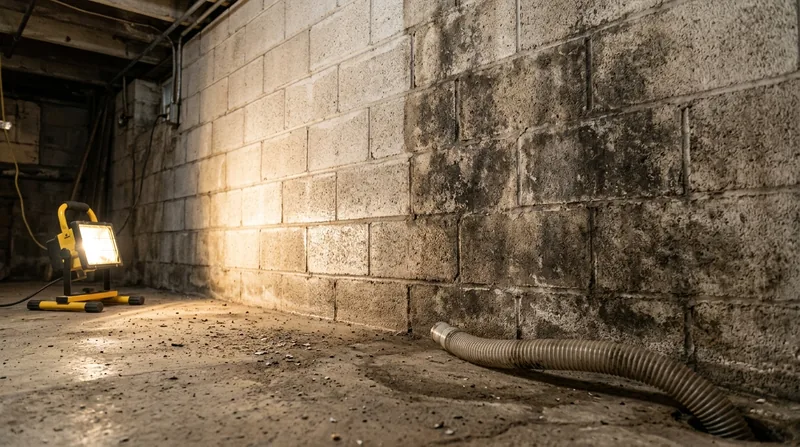




If your basement smells musty after every Iowa City rain, or you see dark staining creeping up the base of a Northside limestone wall, you are likely dealing with Basement Mold Remediation in Iowa City territory. This city sits in the Iowa River valley below Coralville Lake, where loess and glacial till clay on the uplands push water hard against foundations, and river-bottom ground remembers 1993 and 2008. Older Italianate and Queen Anne homes on College Hill sit on local limestone and brick footings that wick moisture. Goosetown cottages, Longfellow foursquares, and 1950s ranches on block basements all trap humid summer air below grade. We fix the moisture source first, then remove the mold growth it fed. Start with a free basement inspection so we can trace where the water is actually entering.
Why Basement Mold Keeps Coming Back in Iowa City's Older Foundations
Mold needs three things: moisture, organic material, and still air. Iowa City basements supply all three. Limestone and brick foundations in College Hill and Goosetown stay damp because mortar joints hold water long after a storm passes. Poured concrete walls in North Liberty and Tiffin sweat in July when humid air meets a cool slab. Add spring snowmelt and hard freeze-thaw cycles, and you get repeated wetting at the cove joint and footing line. Killing surface mold without stopping that moisture just buys you a few months.
- Efflorescence on block walls in Longfellow and Morningside signals water moving through the masonry, not just surface condensation.
- Musty odors that spike in spring and early summer usually mean moisture is trapped behind drywall or under stair framing.
- Peeling paint and soft baseboards along the bottom of a wall point to rising damp from the footing, not a leak from above.
- Sump pump failures during heavy thunderstorms leave standing water that soaks into framing and insulation within hours.
- Window well backups on 1950s east-side ranches push water against basement walls that were never damp-proofed.
We treat the mold, but we earn the result by correcting the moisture path that let it grow in the first place.
Key info: A 1910s brick cottage in Goosetown with a damp footing wall and no drain tile will keep growing mold on any wood or paper stored against it, no matter how many times the visible growth is scrubbed. The fix is drainage and drying, then remediation.
For official guidance on moisture and mold in buildings, the EPA's mold resources are a practical reference for homeowners.
How We Run Basement Mold Remediation in Iowa City
Our sequence is moisture first, containment second, removal third, and drying last. We do not seal off a basement and start scraping until we know why it is wet. That means checking the footing drain, the sump basin, the grading, and the wall itself. Once the source is identified, we set up containment so spores do not spread to the rest of the house, then remove affected materials and treat the surfaces.
- We inspect the basement and foundation, including the sump pit, discharge line, and visible crack patterns.
- We identify the moisture source: hydrostatic pressure, a failed footing drain, a backed-up window well, or condensation from humid summer air.
- We set up poly containment and negative air pressure so debris and spores stay in the work zone.
- We remove mold-damaged drywall, insulation, and wood that cannot be cleaned, and bag it for disposal.
- We treat structural surfaces with an antimicrobial cleaner and HEPA-vacuum the entire area.
- We correct the moisture path with drainage, sealing, or a sump pump replacement if the existing unit is undersized.
- We verify dryness with a moisture meter before we close the job.
Every job ends with a written summary of what we removed, what we treated, and what we changed to keep the basement dry.
Key info: On a 1960s split-level in Coralville, the mold was concentrated on the lower half of a block wall below a window well that filled with silt every spring. We cleared and regraded the well, corrected the downspout, then remediated the wall. The musty smell did not return the following spring.
If the inspection shows a failed interior perimeter drain, we handle that through our interior drain tile system work before remediation begins.
Remediation Approaches We Use Below Grade
Not every mold job is the same size, and not every basement needs the same level of intervention. A small patch of surface growth on a concrete wall after a one-time sump failure is a different job from decades of damp masonry in a Goosetown cottage. We match the approach to the moisture history and the materials involved.
| Approach | Description | Best for |
|---|---|---|
| Surface treatment and cleaning | HEPA vacuuming plus antimicrobial treatment of concrete and masonry surfaces. | Light surface growth on block or poured walls with a known, correctable moisture source. |
| Containment and material removal | Poly barriers, negative air, and removal of mold-damaged drywall, insulation, and framing. | Finished basements where growth has spread behind drywall or under carpet. |
| Remediation plus drainage correction | Removal and treatment combined with footing drain repair, sealing, or a new sump system. | Basements with recurring dampness, efflorescence, or water after every heavy rain. |
| Remediation plus humidity control | Treatment plus a dehumidifier sized for the basement volume and summer humidity load. | Tight poured-concrete basements in North Liberty and Tiffin that sweat in July and August. |
We recommend the least invasive approach that actually solves the moisture problem, not the largest scope we can sell.
Basement Mold Remediation Cost in Iowa City: What to Expect
Most residential remediation work in this market starts around From $1,500. That figure typically covers a contained work area, removal of affected materials, surface treatment, and HEPA cleanup. The number moves up with square footage, the number of rooms affected, and whether the moisture fix requires drainage work. A single wall in a Longfellow bungalow is a smaller job than a finished basement in North Liberty with growth behind three walls.
- Access matters: a low limestone footing in a College Hill basement takes more time than an open poured wall.
- Material type drives disposal cost: carpet, pad, and finished drywall add volume and hauling.
- Drainage correction adds scope: a failed footing drain or sump pump is a separate line item.
- Testing adds a modest amount: air or surface sampling, when requested, is quoted separately.
We give you a written scope before any work begins, so you can compare line by line. Get two or three estimates and ask each contractor what moisture fix they are pairing with the remediation. For a broader look at how we price below-grade work, see our full pricing overview.
What to Look for When Hiring a Basement Mold Remediation Contractor Near Me in Iowa City
Mold remediation below grade is only as good as the moisture diagnosis behind it. Ask any contractor near Iowa City how they plan to find and fix the water source, not just how they will clean the growth. A company that treats mold without addressing drainage or humidity will leave you with the same problem next spring.
- Confirm the company carries general liability insurance and workers' compensation, and ask for a certificate before work starts.
- Get at least two or three written estimates with itemized scopes so you can compare what is actually included.
- Ask for local references from Iowa City or Coralville homeowners with similar foundation types.
- Check whether permits are needed for any structural or drainage work; rules vary by jurisdiction, so verify with the local building department.
- Ask how they contain dust and debris, and whether they verify dryness before closing the job.
Our contact page is the fastest way to schedule an inspection and get a written scope for your basement.
Key info: We are a Basement Health Association (BHA) member and focus only on below-grade residential work. That means our inspection is built around footing drains, hydrostatic pressure, and wall seepage, not general handyman tasks.
If your basement smells musty or shows visible growth, call (319) 205-2135 and we will trace the moisture before we quote the remediation.
Basement Mold Remediation in Iowa City: Pricing Guide
| Service | Price | Details |
|---|---|---|
| Surface treatment and cleaning | Starting at $1,500 | Covers contained HEPA vacuuming and antimicrobial treatment of exposed concrete or block walls, sized by square footage. |
| Containment and material removal | Starting at $2,400 | Adds poly containment, negative air, and removal of mold-damaged drywall, insulation, or carpet in finished basements. |
| Remediation plus drainage correction | On estimate | Needs an on-site look because footing drain repair, sump replacement, or wall sealing changes the scope substantially. |
| Remediation plus humidity control | Starting at $2,100 | Includes treatment plus a dehumidifier sized for the basement volume, common in tight poured-concrete basements. |
| Travel | Included | In Iowa City and surrounding areas, no separate call-out or mileage fee. |
| Estimate | Free | Response within 24h at (319) 205-2135, no obligation to book. |
Indicative pricing, the exact cost depends on square footage, finish, and site access. Free personalized estimate within 24h at (319) 205-2135.


