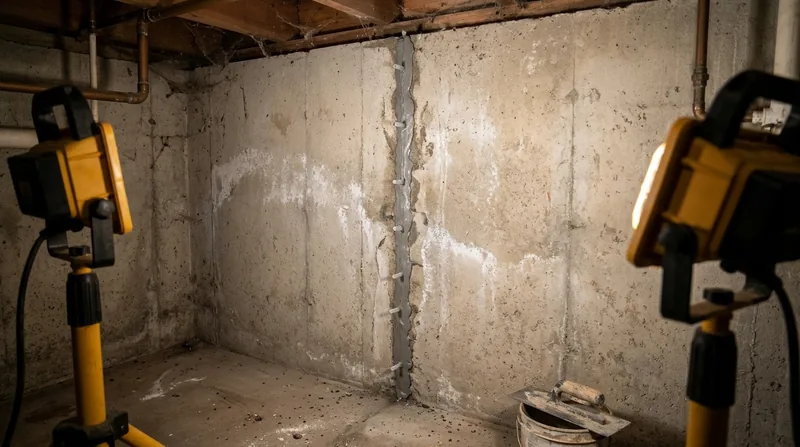




Foundation Crack Repair in Iowa City
Iowa City sits in the Iowa River valley below Coralville Lake, and the ground under most homes here is a mix of loess and glacial till clay on the uplands, limestone bedrock along the river bluffs, and river-bottom soil that took on water hard in 1993 and again in 2008. That clay swells when it soaks up spring rain and summer thunderstorms, then shrinks and shifts through hard freeze-thaw cycles, and the pressure lands directly on your foundation walls. If you have a crack in the poured wall of a North Liberty two-story or the limestone block of an 1890s Italianate on College Hill, Foundation Crack Repair in Iowa City is the first step before that hairline turns into a wet basement. We inspect the crack, match the method to what the wall is actually doing, and tell you plainly when simple injection is enough. Call (319) 205-2135 to get a free basement inspection on the calendar.
Not every crack needs the same answer. A vertical shrinkage crack in a 1970s ranch on the east side is a different animal from a stair-step crack in a Goosetown brick cottage where the footing has moved. We treat them that way. Start with our foundation waterproofing overview if you want the full picture of how we approach below-grade work.
Why Foundation Cracks Are a Real Problem in Iowa City Homes
The dominant failure mode in this city is clay soil moving against older foundations under heavy spring moisture. Iowa City gets soaked in March through June, then bakes dry in July, and that wet-dry swing puts hydrostatic pressure on walls that were never designed for it. The 1850s to 1910s limestone and brick foundations on the Northside and College Hill are especially vulnerable, and so are the 1950s to 1970s block basements across the east side and Coralville.
- Hydrostatic pressure pushes water through any crack, no matter how thin it looks from inside.
- Freeze-thaw cycles widen existing cracks as water freezes inside the wall.
- Efflorescence (the white powder on the wall) tells you water is already moving through the masonry.
- Stair-step cracks in brick or block often mean footing movement, not just shrinkage.
- Settling soil around downspouts and grading sends roof water straight to the foundation.
Ignoring a crack lets a small injection job turn into a wall that needs anchors or carbon fiber straps. Catch it early and the repair stays small.
Key info: A 1920s bungalow in Longfellow with a wet spot on the basement wall after every heavy rain usually has a vertical shrinkage crack that epoxy injection can seal in a single visit. A 1900s brick cottage in Goosetown with a stair-step crack and a bowing wall is a structural conversation, not a sealing job.
For reference on what Iowa requires of contractors working on residential foundations, the Iowa Division of Labor publishes licensing and registration information homeowners can check before hiring.
How We Repair Foundation Cracks in Iowa City, Step by Step
We do not patch cracks one-size-fits-all. Every job starts with a look at the crack itself, the wall material, and what the ground is doing outside. On a 1990s poured-concrete basement in North Liberty, that usually means a clean injection. On an older brick or block wall in Iowa City, we check for movement before we touch a tube of epoxy.
- We inspect the crack from inside and outside, checking width, direction, and whether the wall is moving.
- We identify the wall material (poured concrete, brick, limestone, or block) because each takes a different injection approach.
- We drill and set injection ports along the crack at the spacing the crack actually needs.
- We inject epoxy for structural cracks that need to be bonded back together, or polyurethane for active leaks where the foam needs to expand into wet voids.
- We seal the surface, pull the ports, and confirm the crack is closed.
- If we find hydrostatic pressure or a failing drain tile, we tell you, because injection alone will not hold back a wet clay wall forever.
When the crack is a symptom of water that has nowhere to go, we recommend an interior drain tile system rather than repeated sealing. That is an honest call, and we make it on site, not over the phone.
Key info: A split-level in Morningside had a horizontal crack at mid-wall with active seepage after the spring snowmelt. We injected polyurethane to stop the leak, then flagged the exterior grading and a downspout that dumped right at the corner. Sealing the crack without fixing the water source would have been a callback waiting to happen.
Epoxy vs. Polyurethane Injection and Other Crack Repair Methods
Matching the method to the crack is the whole job. Here is how the main approaches compare for Iowa City housing stock, from poured concrete in Tiffin to brick in the older neighborhoods.
| Approach | Description | Best for |
|---|---|---|
| Epoxy injection | Structural epoxy bonds the crack faces back together and restores wall strength. | Non-leaking vertical or diagonal cracks in poured concrete. |
| Polyurethane injection | Foam expands into wet voids and seals active leaks. | Actively leaking cracks and wet basement walls. |
| Surface sealing and parging | Hydraulic cement or parging closes the face of a minor crack. | Hairline cracks with no active water or movement. |
| Carbon fiber straps | Straps stabilize a bowing wall and stop further inward movement. | Horizontal cracks and bowing walls from soil pressure. |
| Wall anchors | Anchors pull a moving wall back toward plumb from outside. | Walls that have moved and need realignment. |
If the crack is wide, horizontal, or the wall is bowing, injection alone will not fix it, and we will say so. That is when we move to bowing wall repair with straps or anchors.
Foundation Crack Repair Cost in Iowa City: What to Expect
Most single-crack injection jobs in Iowa City start at From $450, and that figure covers a standard vertical crack in a poured wall with ports, injection, and cleanup. The number moves up from there based on what we actually find on site, and we would rather give you a real range after looking than a phone quote that changes on arrival.
- Crack length and width, since a long or wide crack takes more ports and more material.
- Wall material, because brick, limestone, and block take more prep than poured concrete.
- Active water, since a leaking crack may need polyurethane and a look at the drain tile.
- Access, because a finished basement wall or a tight window well slows the work.
- Whether the wall has moved, which pushes the job toward structural repair.
Getting two or three estimates is smart, and we encourage it. Compare what each contractor proposes to do, not just the bottom line. Our full pricing overview lays out how we build a number.
Foundation Crack Repair Near Me: How to Choose a Contractor Near Iowa City
Searching for foundation crack repair near me in Iowa City brings up a lot of names, and not all of them specialize in below-grade work. A general handyman can smear hydraulic cement on a crack, but that is not a repair. Look for a contractor who inspects the crack, explains the method, and puts the scope in writing.
- Confirm the company is licensed and insured, and ask for a certificate of insurance before work starts.
- Get two or three written estimates and compare the proposed method, not just the price.
- Ask for local references from Iowa City, Coralville, or North Liberty jobs similar to yours.
- Ask who pulls the permit if structural repair or drainage changes are involved, since rules vary by jurisdiction.
- Check with the local building department on permit requirements, because thresholds differ across Johnson County.
We are a Basement Health Association (BHA) member, and we are happy to walk you through our credentials before you commit. Reach out through our contact page to set up a free inspection.
One more local note: if your home is in a neighborhood with architectural review or HOA rules, check before any exterior work begins. It is a short conversation that saves a long delay.
Foundation Crack Repair in Iowa City: Pricing Guide
| Service | Price | Details |
|---|---|---|
| Single crack injection (poured concrete) | Starting at $450 | Includes port setting, epoxy or polyurethane injection, and cleanup for one standard vertical crack. |
| Multiple cracks or long cracks | Starting at $750 | Priced per crack length and port count, common in older block and brick basements. |
| Active leak with polyurethane | Starting at $650 | Foam injection for wet, leaking cracks, plus a check of grading and downspout discharge. |
| Structural repair (straps or anchors) | On estimate | For bowing walls or horizontal cracks, an on-site look sets the scope before pricing. |
| Travel | Included | In Iowa City and surrounding areas, no separate call-out or mileage fee. |
| Estimate | Free | Response within 24h at (319) 205-2135, no obligation to book. |
Indicative pricing, the exact cost depends on square footage, finish, and site access. Free personalized estimate within 24h at (319) 205-2135.


