



Foundation Waterproofing in Iowa City: Built for Limestone, Clay, and Hard Freeze-Thaw
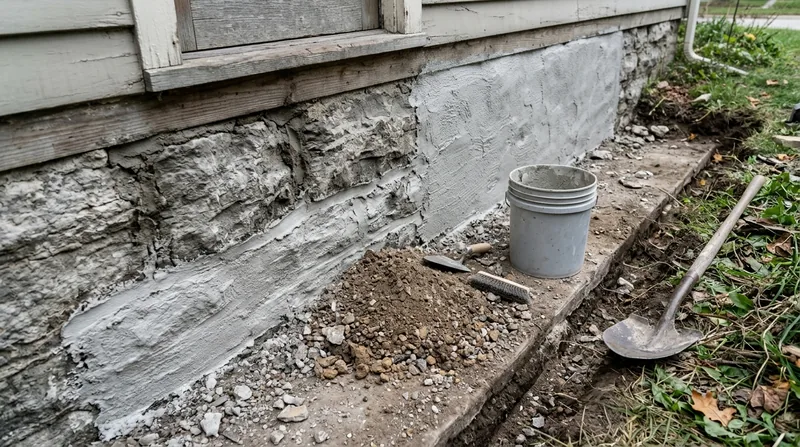
Iowa City sits in the Iowa River valley below Coralville Lake, and that geography writes the rules for every foundation here. Northside and College Hill homes sit on 1850s-1910s local limestone and brick, Goosetown cottages on shallow brick footings, Longfellow foursquares on full block basements, and the newer two-story homes out toward North Liberty and Tiffin on poured concrete. Foundation Waterproofing in Iowa City means reading that building stock correctly before anyone touches a wall. Upland loess and glacial clay soil hold spring rain against the foundation, limestone bluffs along the river push water sideways, and river-bottom ground still remembers 1993 and 2008. We handle repointing with compatible lime mortar, crack injection, membrane and crystalline treatments, and drainage correction, and we tell you plainly when simple crack sealing is enough and when hydrostatic pressure means the drain tile is the real answer. Start with a free basement inspection before you spend a dollar.
Why Foundation Waterproofing Matters on Iowa City's Old Footings and Clay Uplands
The dominant failure mode here is not a single dramatic crack. It is water arriving under hydrostatic pressure through glacial clay soil that drains slowly, then finding the weakest point in a 100-year-old mortar joint, a block course, or a poured wall cold joint. Spring snowmelt and hard freeze-thaw cycles open those joints a little more each year, and summer thunderstorms dump the rest. On the Northside and in Goosetown, the original lime mortar is softer than modern Portland cement, so the wrong repair traps moisture and spalls the brick.
- Limestone and brick foundations on College Hill wick water and show efflorescence long before a crack is visible.
- Block basements in Longfellow and Morningside leak at the mortar joints because the block cores fill and hold water.
- Poured-concrete basements in North Liberty and southeast Iowa City crack at shrinkage joints and cold joints under hydrostatic pressure.
- Downspouts that discharge within two feet of the wall put roof water straight back into the clay.
- Original weeping tile around pre-1950 footings is often clay tile that has collapsed or silted shut.
Each of those failure modes calls for a different repair, and guessing wrong is how homeowners pay twice.
Key info: A Goosetown brick cottage on a shallow footing and a 2010 poured-wall home in North Liberty can both show wet basement walls after the same June storm, but one needs lime repointing and the other needs crack injection. The repair follows the material, not the symptom.
Permits for structural foundation repair and for work that alters drainage vary by jurisdiction, so confirm the current rules with the City of Iowa City before work begins.
How We Diagnose and Waterproof an Iowa City Foundation, Step by Step
We start below grade and work outward. The first question is always where the water enters and what is pushing it, because a wall that weeps after every rain is a drainage problem far more often than a wall problem. On the uplands the clay holds water; along the bluffs the limestone sheds it sideways; in the river bottom the water table itself rises. We map the source before we quote a method.
- We walk the interior perimeter and the exterior grade, and we read the wall material, mortar type, and crack pattern.
- We check the existing drain tile and sump basin, and we test whether the discharge line actually moves water away from the footing.
- We correct grading and downspout extension so surface water stops loading the wall.
- We repair cracks by the right method: epoxy injection for structural cracks, polyurethane injection for active leaks.
- We repoint old limestone and brick with compatible lime mortar and parge only where the wall calls for it.
- We install the drainage correction that fits, whether that is an interior perimeter drain to a sump basin or exterior membrane and dimple board.
- We verify with a water test and hand you a written summary of what we found and what we did.
The order matters, because sealing a wall before the water is redirected just moves the pressure somewhere else.
Key info: A Longfellow foursquare we inspected had a clean-looking poured patch on the front wall and water on the floor behind it. The patch had sealed the visible crack while the footing drain stayed blocked, so the hydrostatic pressure simply found the next joint. We cleared the drainage and injected the active crack, and the floor stayed dry through the next spring melt.
When the diagnosis points to perimeter drainage, the work moves to an interior drain tile system, which is usually the better answer than exterior excavation on a finished basement.
Waterproofing Approaches We Use on Iowa City Foundations
No single method fits a limestone Northside wall, a block Longfellow basement, and a poured North Liberty wall. We match the approach to the material and to what is actually driving the water, and we tell you when the cheaper repair is the correct one.
| Approach | Description | Best for |
|---|---|---|
| Lime mortar repointing | We cut out failed mortar and repack joints with lime mortar matched to the original brick or limestone. | Pre-1930 brick and limestone on the Northside, College Hill, and Goosetown. |
| Epoxy or polyurethane injection | We set injection ports and fill the crack from the inside, sealing it through the full wall thickness. | Poured-concrete shrinkage and cold-joint cracks; active leaks in block walls. |
| Waterproof membrane and dimple board | We apply a membrane to the exterior wall face and protect it with dimple board before backfill. | Exterior access jobs where the wall is being excavated anyway. |
| Crystalline waterproofing | The treatment reacts with moisture in the concrete and grows crystals into the pores and hairline cracks. | Damp poured walls with no single dominant crack. |
| Interior perimeter drain to sump basin | We break out the perimeter, install drain tile to a sump basin, and pipe discharge away from the footing. | Hydrostatic pressure and wet floors where exterior excavation is impractical. |
We quote the method the wall needs, not the most expensive one on the list.
Foundation Waterproofing Cost in Iowa City: What to Expect
Most foundation waterproofing work in Iowa City starts around $3,500, and that figure is a starting point rather than a quote. A single injected crack on a poured wall is a small job. A full interior perimeter drain with a new sump basin, discharge line, and wall sealing on a Longfellow basement is a different scope entirely. On the old limestone and brick homes, the labor in careful lime repointing and surface preparation is what moves the number, not the material cost.
The factors that move price are consistent: wall length and depth, the number of active leaks, whether the existing drain tile can be reused or must be replaced, access for excavation equipment, and whether the wall needs structural work before it can be sealed. On the uplands, heavy clay means more excavation time. Along the bluffs, limestone bedrock close to the surface can slow exterior work. Getting two or three written estimates is smart, and each one should name the method, the linear footage, and what happens if the crew finds something unexpected.
Our full breakdown lives on the pricing overview page, and the free inspection is where the real number starts.
Choosing a Foundation Waterproofing Contractor Near Me in Iowa City
Waterproofing is a below-grade trade, and it is not the same as general foundation repair or plumbing. A contractor who mostly pours new footings may not know that lime mortar must stay breathable on a Northside brick wall, and a plumber can replace a sump pump without ever diagnosing why the basin fills. Ask what the crew will actually do to the wall, not just what they will install. A Basement Health Association member credential is a reasonable starting filter, but the written scope is what protects you.
- Confirm the contractor is licensed and insured, and ask for the certificate of insurance before work starts.
- Get two or three written estimates that name the method and the linear footage, not a lump sum.
- Ask for references from Iowa City, Coralville, or North Liberty jobs on the same wall material as yours.
- Ask who pulls the permit if structural repair or drainage alteration is involved, and verify the requirement with the local building department.
- Read the warranty terms, and confirm that any warranty is transferable in writing.
If a bid is far below the others, ask what it leaves out, because the drainage correction is usually the part that gets cut.
Reach us through the contact page to schedule an inspection at (319) 205-2135.
Foundation Waterproofing in Iowa City: Pricing Guide
| Service | Price | Details |
|---|---|---|
| Crack injection (single crack) | Starting at $3,500 | Includes port setting, epoxy or polyurethane injection, and cleanup; crack length and wall thickness move the price. |
| Lime mortar repointing and wall sealing | Starting at $4,200 | Includes joint cutting, compatible lime mortar repointing, and breathable sealer; linear footage and scaffolding access drive cost. |
| Interior perimeter drain and sump basin | Starting at $6,500 | Includes drain tile, sump basin, discharge line, and wall sealing; basement perimeter length and concrete breaking set the range. |
| Exterior membrane with dimple board | On estimate | Exterior excavation depends on access, soil depth, and whether limestone bedrock sits close to the footing. |
| Travel | Included | In Iowa City and surrounding Johnson County communities, with no separate call-out or mileage fee. |
| Estimate | Free | Response within 24 hours at (319) 205-2135, with no obligation to book the work. |
Indicative pricing, the exact cost depends on square footage, finish, and site access. Free personalized estimate within 24h at (319) 205-2135.


