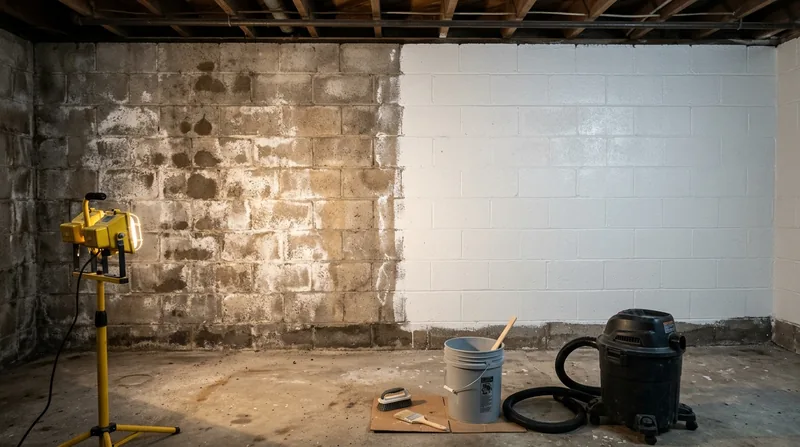




Basement Wall Sealing in Iowa City: Stop Damp Walls Before They Turn Into Wet Basements
Iowa City sits in the Iowa River valley below Coralville Lake, and that geography writes the rules for every basement in town. On the Northside and College Hill, 1850s to 1910s Italianate, Queen Anne and Greek Revival homes sit on local limestone and brick foundations that have absorbed more than a century of spring rain and snowmelt. Down in Goosetown, the 1870s to 1910s brick and frame Bohemian cottages show the same pattern, and the Longfellow and Morningside bungalows and foursquares on full basements are no different. If you are searching for Basement Wall Sealing in Iowa City, you are usually looking at white powder on the block, a chalky stain line after every thunderstorm, or a musty smell that shows up in June and never quite leaves. We handle that work below grade, and we tell you honestly when a sealer is the right fix and when hydrostatic pressure means you need a drain system instead. Start with a free basement inspection so we can identify the problem before anyone sells you a coating.
Why Basement Wall Sealing Matters in Iowa City's Clay and Limestone Foundations
The uplands around Iowa City are loess and glacial till clay, and that clay holds water like a sponge after a storm. River-bottom ground near the Iowa River flooded badly in 1993 and again in 2008, and the bluffs along the river sit on limestone bedrock that pushes water sideways instead of letting it drain down. Add hard freeze-thaw cycles every February and March, and the result is predictable: moisture migrates through brick, block and poured concrete, efflorescence blooms on the interior face, and the basement smells damp by mid-spring. Sealing the wall face slows that migration and gives you a clean, paintable surface, but it does not stop water that is being pushed in by hydrostatic pressure.
- Efflorescence appears as white salt powder because water is moving through the masonry and evaporating on the inside face.
- Damp patches and dark tide lines after rain usually mean the wall is wicking moisture from saturated glacial clay outside.
- Spalling brick and flaking parging on Northside and College Hill foundations signal repeated wet-dry cycles, not just old age.
- A musty basement smell in summer points to persistent moisture that a sealer can reduce but not eliminate if the source is outside.
Sealing is the right first move when the wall is damp but dry to the touch between storms, and the wrong move when water is actually standing at the cove joint.
Key info: A 1912 foursquare in Longfellow with chalky block walls and no standing water is a textbook sealing job. A 1958 ranch on the east side with water running across the floor after every July storm needs an interior drain tile system, not a coating, because the water is coming up through the cove joint under pressure.
If you want to understand how sealing fits into the bigger picture, the basement waterproofing service page walks through the full range of below-grade solutions. For permit questions on any work that touches structural masonry or drainage, verify requirements with the City of Iowa City building department before work begins.
How We Seal Basement Walls in Iowa City Homes
Every job starts with a walkthrough of the basement and the exterior grade. We look at the wall face, the cove joint, the window wells, the downspout extensions and the grading around the foundation, because a sealer applied over an active leak is money wasted. On limestone and brick foundations we are careful with surface preparation, since aggressive wire brushing can scar historic masonry. On poured concrete in the newer North Liberty and Tiffin homes, preparation is faster but the diagnosis still matters, because a hairline crack that is weeping needs epoxy or polyurethane injection, not a surface coating.
- We inspect the wall and identify whether the moisture is wicking, condensing, or being pushed in by hydrostatic pressure.
- We remove efflorescence, loose parging and failing paint so the sealer bonds to sound masonry.
- We repair active cracks with epoxy or polyurethane injection and install injection ports where needed.
- We apply a penetrating sealer on damp but sound walls, or a membrane sealer where the surface needs a heavier barrier.
- We correct grading and downspout extensions so roof water moves away from the foundation instead of soaking the clay beside it.
- We leave you with a clear explanation of what the sealer will and will not do, and what to watch for next spring.
When the diagnosis points to pressure rather than surface dampness, we say so and point you to the right system instead of selling a coating that will fail by the next snowmelt.
Key info: A 1964 split-level in Coralville had efflorescence on three walls and a damp smell every April. The walls were dry between storms, so we cleaned the block, applied a penetrating sealer and extended two downspouts. Two years later the walls are still dry and the smell is gone. A house two streets over with water on the floor got an interior drain tile system instead, because sealing would have trapped the pressure behind the wall.
Sealing Approaches We Use on Iowa City Basement Walls
Not every wall needs the same product, and the right choice depends on the masonry type, the moisture source and how the basement is used. Here is how the main approaches compare for Iowa City housing stock.
| Approach | Description | Best for |
|---|---|---|
| Penetrating sealer | Soaks into brick, block or concrete and blocks capillary wicking without leaving a film on the surface. | Damp but sound walls on older Northside and Goosetown masonry that need to keep breathing. |
| Membrane sealer | Builds a heavier elastomeric barrier on the interior face of the wall. | Poured concrete walls in North Liberty and Tiffin with minor seepage and no standing water. |
| Crack injection plus sealer | Epoxy or polyurethane injection closes active cracks before the wall is sealed. | Block and poured walls with visible vertical cracks that weep after rain. |
| Parging repair plus sealer | Failed parging is removed and replaced before sealing so the coating has a sound base. | Older limestone and brick foundations with flaking surface mortar. |
| Drainage correction | Grading, downspout extensions and window well drainage fixed alongside sealing. | Homes where roof water is soaking the clay right beside the foundation. |
We match the approach to the wall, not to a sales target, and we will tell you when sealing alone is not enough.
Basement Wall Sealing Cost in Iowa City: What to Expect
Sealing is one of the lower-cost below-grade services, and most Iowa City homeowners should plan on a starting point around $1,500 for a typical basement wall sealing job. That figure covers surface preparation, efflorescence removal and the sealer itself on a standard basement. The number moves up with wall length, the number of separate rooms or obstructions, whether cracks need injection first, and whether the wall is historic brick or limestone that needs gentler preparation. A full basement with parging repair and crack injection will land well above the starting figure.
Getting two or three estimates is smart because the diagnosis matters more than the price. A contractor who quotes a coating without checking the cove joint and the grading is guessing, and the sealer will fail by the next spring thaw. Ask each bidder what they found and why they chose the approach. Our full pricing overview gives you the detail behind the starting figure so you can compare bids on equal terms.
What to Look for in a Basement Wall Sealing Contractor Near Me in Iowa City
Hiring for below-grade work near Iowa City means checking the same basics you would for any trade, plus a few that are specific to waterproofing. Ask whether the company is licensed and insured, and request a certificate of insurance before work starts. Get multiple written estimates and compare the diagnosis, not just the total. Ask for references from homes with similar foundations, because a 1910 brick foundation and a 2015 poured wall are different jobs. Confirm who pulls any permit if the work touches structural masonry or drainage, and verify the rules with the local building department. If your neighborhood or association has requirements, check those before scheduling.
We are a Basement Health Association member, we specialize in below-grade work only, and we will tell you plainly when the honest answer is a drain system rather than a sealer. Call (319) 205-2135 to schedule a free inspection and get a straight answer about your walls.
Basement Wall Sealing in Iowa City: Pricing Guide
| Service | Price | Details |
|---|---|---|
| Single wall or small basement sealing | Starting at $1,500 | Includes surface prep, efflorescence removal and penetrating sealer on a standard basement wall run. |
| Full basement sealing with membrane | Starting at $2,400 | Elastomeric membrane across all walls, with crack prep and grading check included in the scope. |
| Crack injection plus sealing | Starting at $2,900 | Epoxy or polyurethane injection on active cracks before the wall is sealed, priced by crack count. |
| Historic masonry or parging repair | On estimate | Brick and limestone foundations need gentler prep and parging replacement, so we look first. |
| Travel | Included | In Iowa City and surrounding areas, no separate call-out or mileage fee. |
| Estimate | Free | Response within 24h at (319) 205-2135, no obligation to book. |
Indicative pricing, the exact cost depends on square footage, finish, and site access. Free personalized estimate within 24h at (319) 205-2135.


