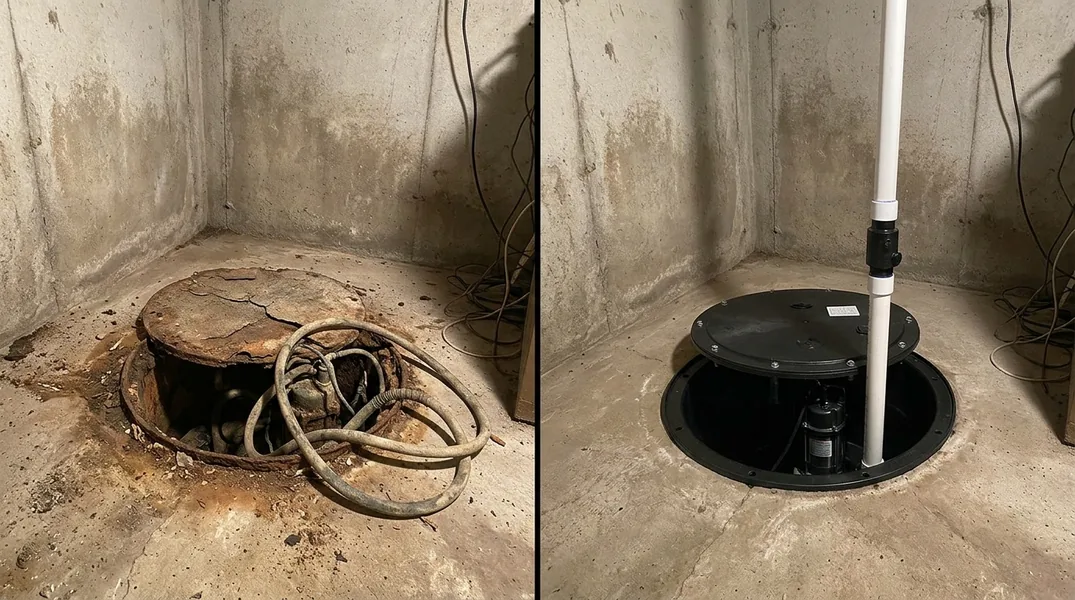
Why Sump Pump Maintenance Matters Before Eastern Iowa's Spring Storms
Spring in Eastern Iowa brings a predictable pattern: snowmelt saturating the ground, followed by heavy thunderstorms that dump inches of rain in a matter of hours. For homeowners in Iowa City, that combination puts enormous pressure on the foundation and drainage systems. Your sump pump is the last line of defense between that water and your finished basement, storage area, or mechanical equipment.
The problem is that sump pumps sit idle for months during winter. When they are finally called into action during the first big storm, small issues that developed during the off-season can turn into a flooded basement. A pump that is clogged, stuck, or running on a failing check valve may quit exactly when you need it most. Taking a few hours to inspect and maintain your system before storm season is one of the most cost-effective things you can do as a homeowner.
The Sump Pump Check Valve: A Small Part With a Big Job
If there is one component homeowners overlook, it is the sump pump check valve. This one-way valve sits on the discharge pipe and prevents water from flowing back into the sump pit after the pump shuts off. Without a working check valve, every cycle ends with a rush of water returning to the pit, forcing the pump to run again and again. That short cycling wears out the motor quickly and can leave you with a burned-out pump during a storm.
During your spring maintenance, inspect the check valve for debris, mineral buildup, and proper orientation. It should be installed so the arrow points away from the pump, and it should close firmly without leaking. If your valve is old, cracked, or making noise, replace it. It is an inexpensive part that protects a much more expensive pump. While you are at it, clean the intake screen at the bottom of the pump and make sure the float moves freely. A float that sticks in the off position is one of the most common reasons sump pumps fail during heavy rain.
Battery Backup Sump Pump: Your Safety Net During Spring Storm Basement Flooding
Spring storms in Eastern Iowa frequently knock out power, and a sump pump without electricity is useless. A battery backup sump pump runs on a charged battery when the primary pump loses power or when water volume overwhelms the main pump. It is not a replacement for your primary system, but it buys critical hours during the worst storms, which is often enough to prevent spring storm basement flooding.
If you already have a backup system, test it before storm season. Most units have a test button or float you can lift manually. Check the battery terminals for corrosion, verify the charge indicator, and confirm the backup pump actually moves water. Batteries have a limited lifespan, typically three to five years, so replace yours if it is old or will not hold a charge. If you do not have a backup, this is the year to add one. For homeowners who want a comprehensive solution, pairing a backup pump with professional Basement Waterproofing gives you layered protection against water intrusion.
Testing Your System and Clearing the Discharge Line
A sump pump that has not run all winter should be tested before the first storm. Pour several gallons of water into the pit and watch the pump activate. It should start quickly, move water steadily, and shut off cleanly when the pit empties. Listen for grinding, rattling, or straining sounds, which can indicate a failing motor or a blocked impeller. If the pump runs but moves very little water, the discharge line may be clogged or frozen.
Trace the discharge line to where it exits your home. It should direct water several feet away from the foundation and slope downward so water cannot flow back. Check for kinks, ice damage, or debris blocking the outlet. In Coralville and other nearby communities, frozen or buried discharge lines are a common cause of spring flooding. If your discharge line discharges too close to the house, water can soak back into the soil and find its way into the foundation. Extending the line or adding a splash block is a simple fix that makes a real difference.
When Sump Pump Maintenance Is Not Enough: Basement Waterproofing Near Me
Sometimes a well-maintained sump pump still cannot keep up. If your basement floods every spring despite a working pump, the problem may be larger than the pump itself. Water may be entering through the cove joint, cracks in the foundation wall, or hydrostatic pressure beneath the slab. In those cases, an Interior Drain Tile System can capture water at the perimeter and channel it to the sump pit, while Foundation Waterproofing addresses the source of the moisture.
Homeowners in North Liberty and Tiffin face the same clay-heavy soils and high water tables that make spring flooding common. If you have questions about whether your system is ready, or you want to explore pricing for a more permanent solution, the team at Iowa City Waterproofing can help. Call (319) 205-2135 or request a free estimate before the next round of storms arrives.
Looking for a professional basement waterproofing contractor in Iowa City? Iowa City Waterproofing responds fast for all your basement waterproofing needs.
Get a Free QuoteOur services: Basement Waterproofing · Interior Drain Tile System · Exterior Basement Waterproofing